Long-range hunting rifles and precision rifles share many engineering characteristics, but they’re designed around different priorities.
Both may feature premium barrels, precision-machined actions, adjustable stocks, and modern optics. The primary differences involve weight, barrel construction, ergonomics, and intended use.
Understanding these distinctions helps when comparing premium rifle platforms from manufacturers such as Bergara, Barrett, Daniel Defense, Sauer, and Q.
Long-Range Hunting Rifles vs. Precision Rifles at a Glance
| Feature | Long-Range Hunting Rifle | Precision Rifle |
|---|---|---|
| Primary purpose | Field use and portability | Target shooting and competition |
| Weight | Generally lighter | Generally heavier |
| Barrel profile | Lightweight to medium | Medium to heavy |
| Stock design | Traditional or lightweight composite | Adjustable stock or chassis |
| Ergonomics | Carrying comfort and handling | Stability and adjustability |
| Magazine | Internal or detachable | Often detachable box magazine |
| Main tradeoff | Portability vs. stability | Stability vs. weight |
These are general design tendencies. Many modern rifles combine characteristics of both categories.
Long-Range Hunting Rifles: Built for the Field
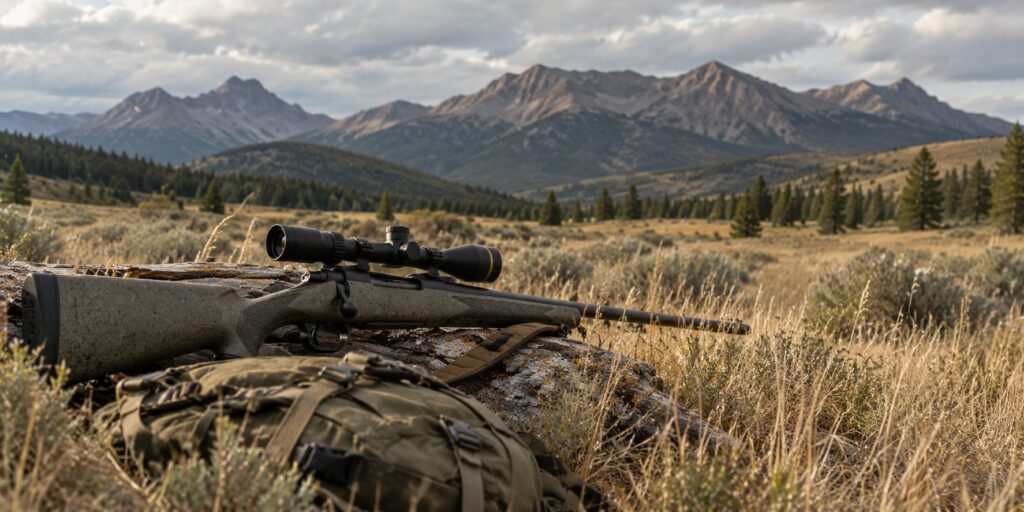
Long-range hunting rifles balance precision-oriented construction with portability.
Because hunters may carry their rifles over considerable distances, manufacturers often prioritize reduced weight, weather resistance, and comfortable handling.
Common characteristics include lightweight barrel contours, composite stocks, and streamlined configurations that minimize unnecessary bulk.
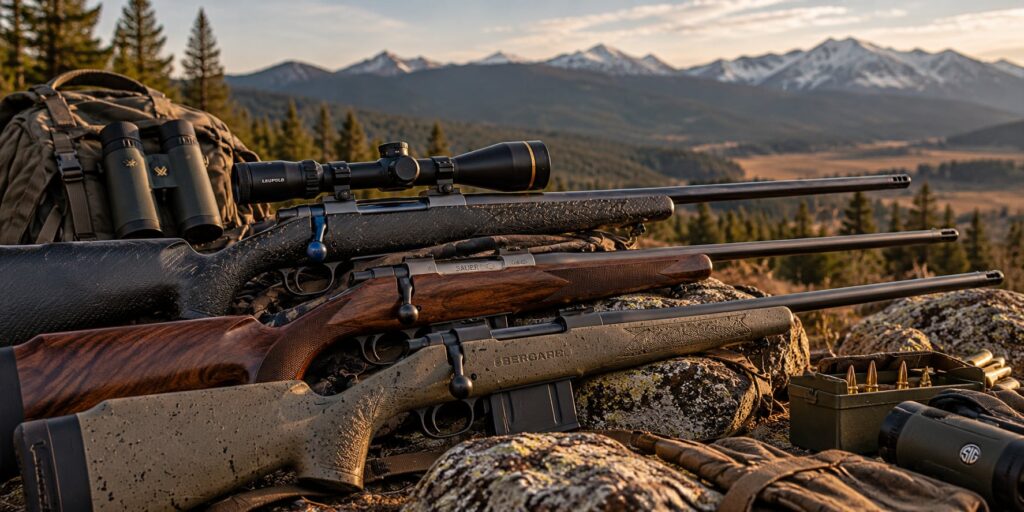
Bergara and Sauer offer hunting rifles that incorporate modern materials and precision-focused engineering while retaining traditional sporting-rifle characteristics.
Q’s The Fix takes a different approach, combining lightweight construction with a folding stock and unconventional chassis-style design.
The defining characteristic: A hunting rifle balances precision-oriented features with practical field handling.
Precision Rifles: Built for Stability and Consistency
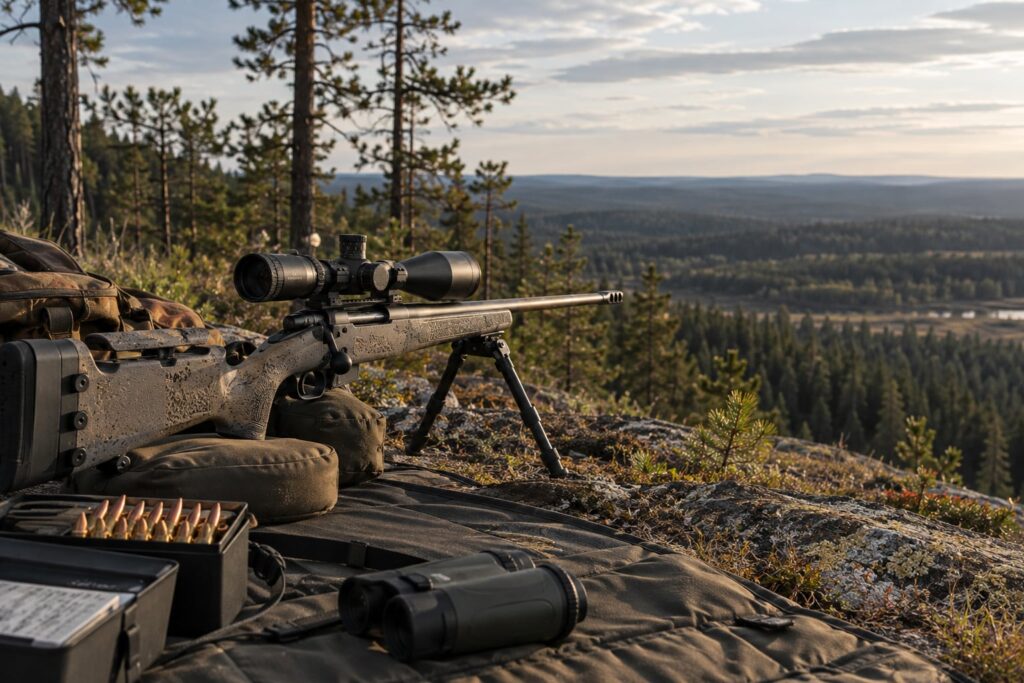
Dedicated precision rifles generally emphasize stability, mechanical consistency, and adjustable ergonomics.
Because these rifles are often used from established shooting positions, manufacturers can incorporate heavier barrels, substantial chassis systems, and additional adjustment features without prioritizing portability.
The Daniel Defense DELTA 5 PRO and Barrett MRAD illustrate different approaches to precision engineering.
The DELTA 5 PRO features a competition-oriented chassis with adjustable ergonomics. The MRAD emphasizes modular construction, including an interchangeable barrel system.
The defining characteristic: A precision rifle prioritizes stability and adjustability over ease of carrying.
Five Differences That Matter Most
1. Weight and Balance
Weight is one of the clearest distinctions.
Lighter hunting rifles are generally easier to carry over extended distances, while heavier precision rifles can provide greater stability and reduced perceived recoil.
However, overall balance and stock geometry also influence handling. A lighter rifle isn’t automatically more comfortable, nor is a heavier rifle necessarily more accurate.
2. Barrel Construction
Hunting rifles frequently use lighter barrel profiles to reduce overall weight.
Precision rifles commonly incorporate heavier barrels, which provide greater thermal mass during repeated firing.
Both categories may use stainless-steel, carbon-steel, or carbon-fiber-wrapped barrels. Manufacturing quality and barrel design matter more than material alone.
3. Stock vs. Chassis
Traditional hunting rifles typically feature wood, synthetic, or composite stocks.
Precision rifles often use aluminum chassis systems with adjustable cheekpieces, length-of-pull settings, and accessory interfaces.
Modern crossover rifles increasingly combine lightweight construction with precision-style adjustability.
4. Accuracy Expectations
A heavier precision rifle isn’t automatically more accurate than a lightweight hunting rifle.
Both may incorporate high-quality barrels and precisely manufactured actions.
The distinction often lies in how the complete rifle is configured to support consistent performance under different conditions.
Manufacturer accuracy guarantees should be evaluated according to their stated testing procedures and limitations.
5. Ergonomics
Hunting rifles generally emphasize carrying comfort, balance, and straightforward handling.
Precision rifles may offer more extensive adjustment options to accommodate different shooting positions and equipment.
Stock geometry, grip shape, and overall fit can be more meaningful than small differences in published specifications.
Comparing Premium Rifle Platforms
Several manufacturers offer rifles that illustrate these different design philosophies.
| Rifle Platform | Category | Distinguishing Characteristics |
|---|---|---|
| Bergara B-14 Wilderness | Hunting | Modern materials and traditional hunting configurations |
| Sauer 505 | Premium hunting | Refined ergonomics and modular features |
| Q The Fix | Lightweight crossover | Folding stock and unconventional construction |
| Bergara competition models | Precision | Competition-oriented configurations |
| Daniel Defense DELTA 5 PRO | Precision | Adjustable chassis and heavier construction |
| Barrett MRAD | Specialized precision | Modular platform and interchangeable barrels |
Individual models vary in weight, chambering, barrel configuration, and available features.
Which Type of Rifle Makes More Sense?
The most useful comparison starts with the intended application.
| Intended Use | Characteristics Worth Considering |
|---|---|
| Backcountry hunting | Lower weight, portability, weather resistance |
| General big-game hunting | Balanced handling and durability |
| Long-range hunting | Balance between portability and precision features |
| Recreational target shooting | Stability, ergonomics, barrel construction |
| Precision competition | Adjustable chassis, weight, competition-specific features |
| Mixed field and range use | Crossover designs with balanced priorities |
A dedicated precision rifle may incorporate features that add unnecessary weight for extended field use. Conversely, a lightweight hunting rifle may lack adjustments valued by competitive shooters.
The better comparison is between specific models and their intended applications, not simply between categories.
Final Thoughts
Long-range hunting rifles and precision rifles share many mechanical principles, but their design priorities differ.
Hunting rifles emphasize portability, balance, and field durability. Precision rifles generally prioritize stability, adjustability, and consistency during extended shooting sessions.
Modern crossover platforms increasingly blur these distinctions.
Understanding how weight, barrel construction, ergonomics, and intended use influence rifle design provides a more meaningful basis for comparing premium rifles than price or advertised accuracy alone.